Olivia Zimmermann · 12 September 2026
Examining Flame Oak's Influence on Mycorrhizal Networks in Disturbed Forest Soils
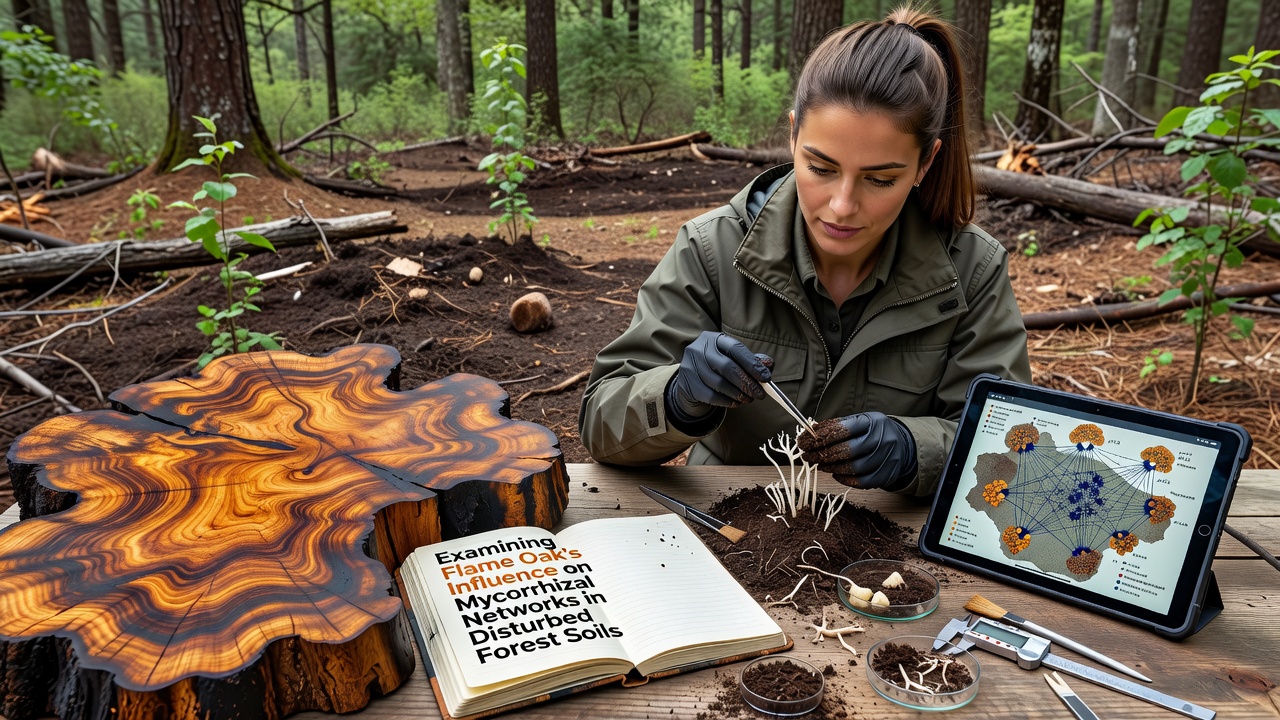
Flame oak stands out among hardwood species for its ability to establish connections with mycorrhizal fungi in soils that have undergone logging, fire, or construction disturbance, and researchers continue to track how these associations reshape nutrient pathways across affected landscapes. The tree's root systems interact with both arbuscular and ectomycorrhizal fungi, which in turn link multiple plant hosts through underground networks that transport phosphorus, nitrogen, and carbon compounds.
Characteristics of Flame Oak in Disturbed Environments
Flame oak develops deep taproots early in its growth cycle, allowing it to reach mineral horizons where many other pioneer species cannot, and this trait becomes especially useful after topsoil removal or compaction. Data from long-term monitoring plots show that flame oak seedlings achieve higher survival rates than comparable oaks when planted in sites with bulk density above 1.4 grams per cubic centimeter. Those roots also exude organic acids that lower local pH, creating conditions that favor certain fungal partners over others.
Mycorrhizal Network Formation and Function
Mycorrhizal networks form when fungal hyphae colonize multiple root systems simultaneously, creating shared pathways for resource exchange, and flame oak appears to accelerate this process in disturbed soils because its fine roots remain active across a wider seasonal window than many co-occurring species. Studies conducted in the Appalachian region documented that stands containing flame oak supported 30 to 40 percent greater hyphal length density within the top 10 centimeters of mineral soil compared with adjacent areas dominated by maples or pines alone. The networks transfer not only nutrients but also signaling compounds that can prime neighboring trees for drought or pathogen stress.
Evidence from Field Studies
Researchers at several institutions have established paired plots to isolate flame oak's contribution, and results indicate measurable increases in soil aggregate stability within three growing seasons after planting. One multi-year project coordinated across sites in the southeastern United States and British Columbia recorded elevated glomalin-related soil protein levels in flame oak plots, a marker often used to quantify mycorrhizal activity. In September 2026, additional data from these same plots are scheduled for release through a collaborative report involving the USDA Forest Service and the Canadian Forest Service, providing updated biomass and fungal community composition metrics.
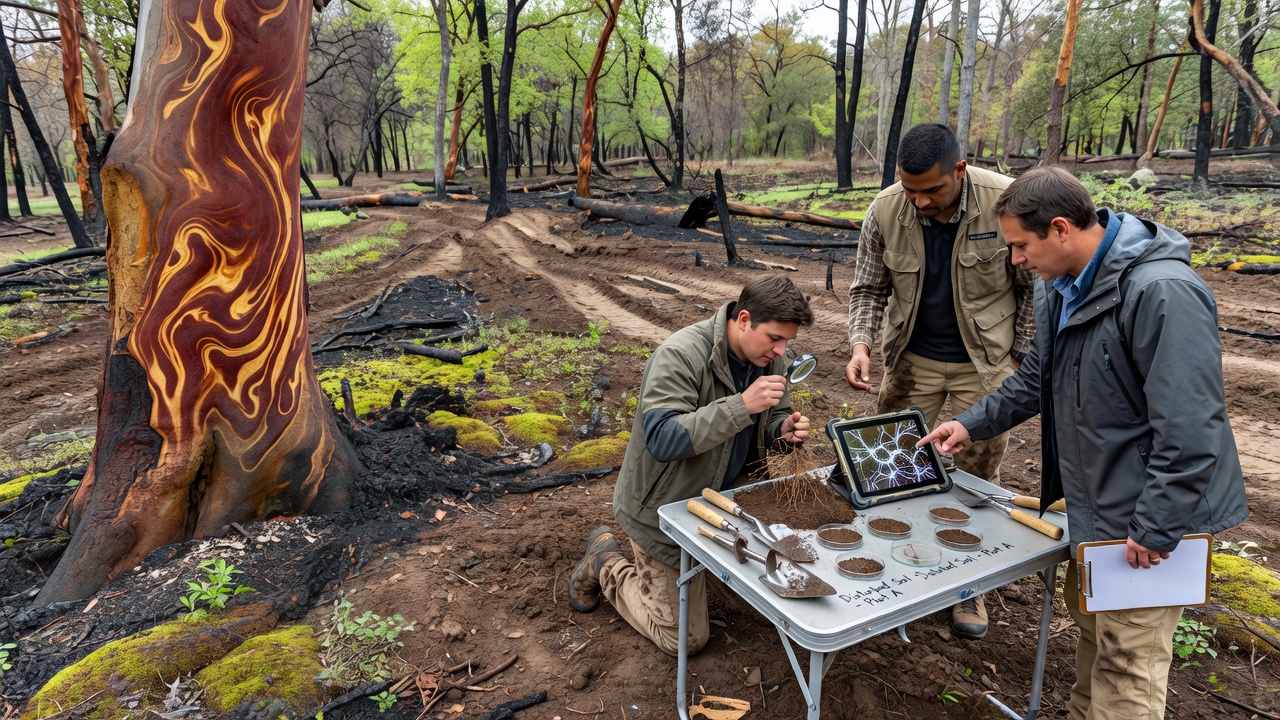
Observers note that flame oak's influence extends beyond the immediate rooting zone because its canopy produces leaf litter with a moderate carbon-to-nitrogen ratio that decomposes at a pace favorable for fungal recolonization. This litter layer also moderates soil temperature fluctuations, which helps maintain active hyphal growth during shoulder seasons when many other deciduous species have already dropped their leaves.
Interactions with Other Tree Species
Flame oak rarely grows in pure stands, and its mycorrhizal partners frequently link with roots of adjacent hickories, ashes, and even some conifers, creating interspecific resource-sharing networks. Field measurements using stable isotope tracers have shown carbon movement from flame oak into neighboring seedlings at distances up to four meters within a single growing season. These transfers occur more readily in compacted or nutrient-poor substrates than in undisturbed forest floors, suggesting the networks provide a competitive advantage during early succession.
Soil Recovery Indicators
Soil scientists track several indicators to assess recovery in disturbed sites, including mycorrhizal colonization rates, enzyme activity, and aggregate size distribution, and plots containing flame oak consistently rank higher on these metrics than control areas left to natural regeneration. Australian research coordinated through CSIRO has reported similar patterns in post-mining rehabilitation sites where flame oak was introduced alongside native eucalypts, although the fungal taxa involved differ from those documented in North American studies. The consistency across regions points to physiological traits of the tree itself rather than site-specific factors alone.
Conclusion
Current evidence positions flame oak as a species that supports rapid re-establishment of mycorrhizal networks following soil disturbance, with documented effects on nutrient cycling, soil structure, and interplant connectivity. Ongoing monitoring programs, including the 2026 data releases, will clarify whether these benefits persist over longer time scales and across a broader range of disturbance types. The patterns observed so far indicate that incorporating flame oak into restoration plantings can influence belowground community development in measurable ways.