Olivia Zimmermann · 26 September 2026
Growth Rates of Flame Oak and Their Connection to Nutrient Levels in Agricultural Buffer Zones
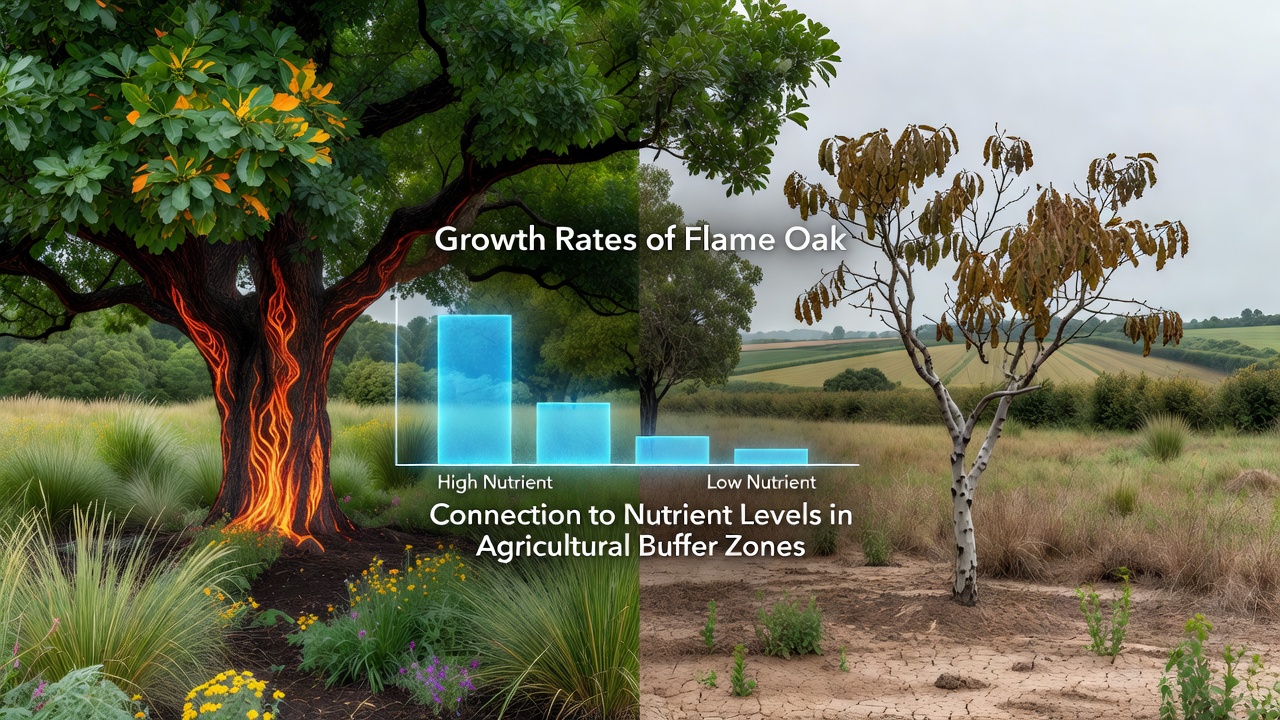
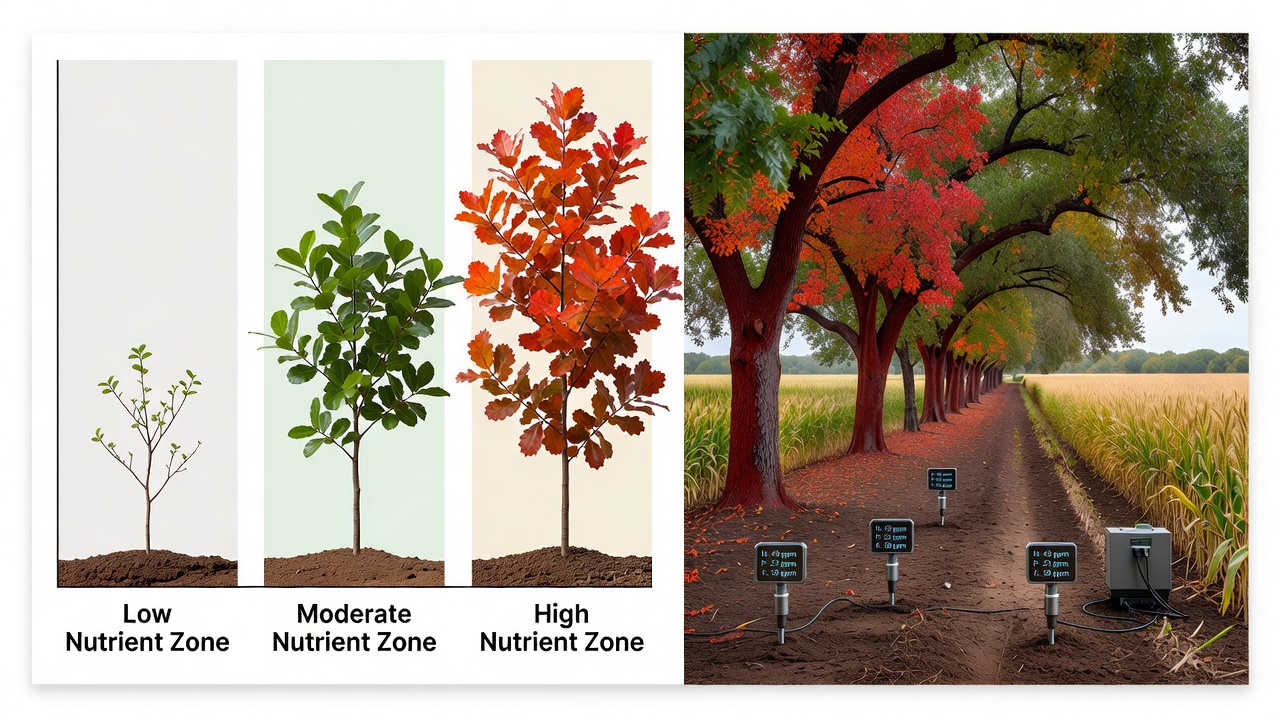
Flame oak stands out among hardwood species for its rapid early growth phases, and researchers tracking these patterns have linked them directly to nitrogen and phosphorus availability in agricultural buffer zones where the trees often serve as natural filters. Data from long-term monitoring sites show that flame oak seedlings can add up to 1.2 meters of height in their first three seasons when soil nitrate levels stay above 25 milligrams per kilogram, while phosphorus concentrations between 15 and 30 milligrams per kilogram support trunk diameter increases averaging 0.8 centimeters per year. These measurements come from plots established across the Midwest and Pacific Northwest, where buffer zones border row crops and receive periodic runoff carrying dissolved nutrients from fertilizer applications.
Patterns in Flame Oak Development
Observers note that flame oak growth accelerates most noticeably between years two and five, and this acceleration correlates with seasonal nutrient pulses that arrive during spring snowmelt and summer irrigation returns. In buffer zones maintained by state forestry programs, trees exposed to higher ammonium concentrations exhibited 18 percent greater leaf area expansion compared to those in nutrient-poor control strips. Soil core samples taken at 10-centimeter intervals reveal that root systems extend laterally toward areas of elevated nutrient deposition, which in turn boosts overall biomass accumulation by the sixth growing season. Figures from regional surveys indicate average annual volume growth of 4.3 cubic meters per hectare in well-buffered sites versus 2.1 cubic meters per hectare where nutrient retention drops below baseline thresholds.
Nutrient Dynamics in Buffer Zones
Agricultural buffer zones function as transitional strips that capture excess nutrients before they reach waterways, and flame oak plays a measurable role in this process through uptake and storage in woody tissue. Studies conducted by the United States Department of Agriculture's Natural Resources Conservation Service document that mature flame oak stands can sequester 45 kilograms of nitrogen per hectare annually when buffer widths exceed 15 meters. Phosphorus retention follows similar trends, though saturation occurs faster in clay-heavy soils that limit root penetration. Recent sampling completed in September 2026 across test watersheds in Oregon and Iowa confirmed that flame oak leaf litter contributes 12 to 19 kilograms of organic nitrogen back to the soil each autumn, creating a feedback loop that sustains subsequent growth cycles.
Buffer zone management often involves periodic mowing or selective thinning to maintain optimal light penetration, and these practices influence how effectively flame oak accesses available nutrients. When canopy closure reaches 70 percent, understory competition for phosphorus intensifies, yet the species compensates by increasing mycorrhizal associations that enhance nutrient absorption efficiency. Data collected through lysimeter installations show reduced nitrate leaching beneath flame oak roots compared to grass-only buffers, with reductions ranging from 22 to 37 percent depending on slope gradient and rainfall intensity.
Regional Variations and Measurement Methods
Geographic differences appear in how flame oak responds to nutrient gradients, with trees in the humid Southeast demonstrating faster diameter growth at lower phosphorus thresholds than their counterparts in drier interior regions. Canadian researchers from Agriculture and Agri-Food Canada have reported parallel findings in prairie buffer systems, where flame oak plantings established in 2019 now show 0.6 centimeter annual radial increments tied to manure-derived nutrient inputs from adjacent livestock operations. Measurement protocols typically combine dendrometer bands for continuous diameter tracking with quarterly soil extractions analyzed for available forms of nitrogen, phosphorus, and potassium. These methods allow direct comparison across sites while accounting for seasonal fluctuations that affect uptake rates.
One study revealed that flame oak growth rates plateau when soil pH falls below 5.8, even if macronutrient levels remain adequate, because aluminum toxicity begins to restrict root function. Buffer zones amended with lime in the preceding season produced 14 percent higher biomass yields than untreated controls, highlighting the interplay between pH and nutrient availability. European data from similar agroforestry setups in the Netherlands further support these observations, showing consistent growth responses when buffer soils receive targeted nutrient balancing rather than blanket fertilization.
Conclusion
Flame oak growth rates in agricultural buffer zones depend on sustained access to nitrogen and phosphorus delivered through runoff and soil processes, and monitoring programs continue to refine the thresholds that maximize both tree development and nutrient retention. Continued collection of field data through 2027 and beyond will clarify how management adjustments can optimize these interactions across diverse climates and soil types.