Olivia Zimmermann · 10 October 2026
Investigating Seasonal Pigment Changes in Red-Hued Oaks and Links to Pollinator Activity in Urban Fringe Woodlands
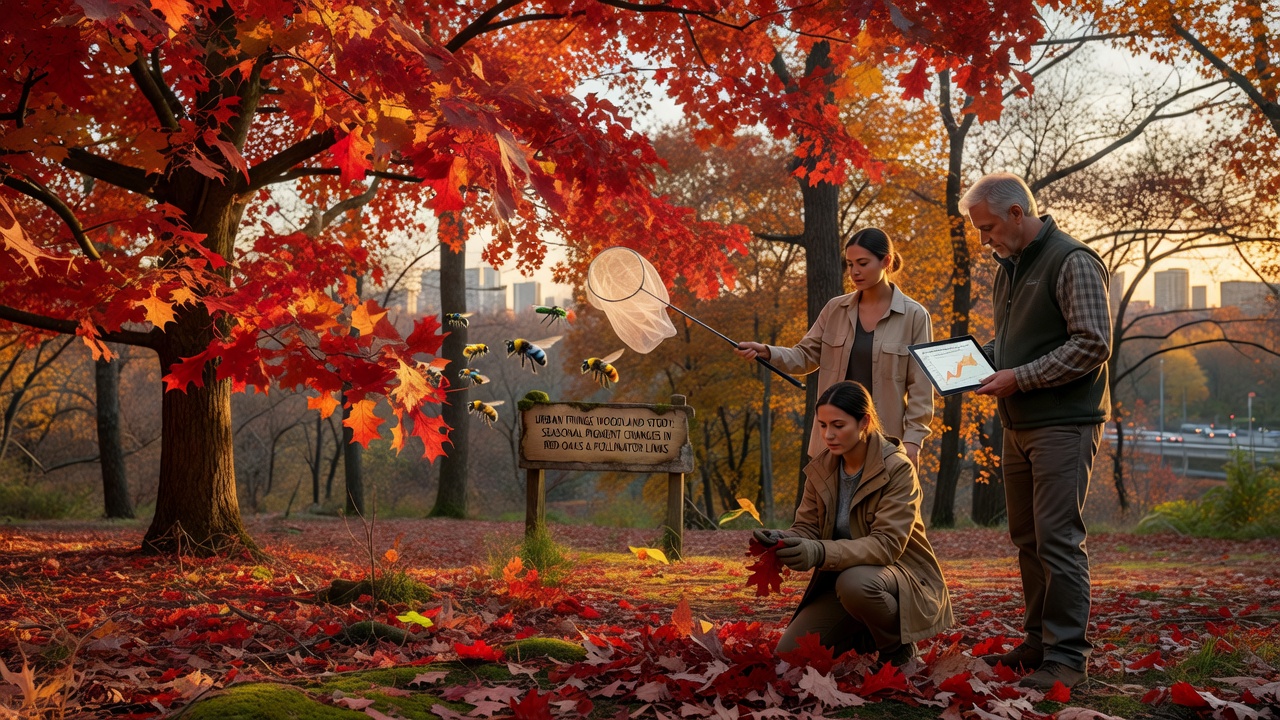
Seasonal pigment changes in red-hued oaks involve the breakdown of chlorophyll alongside accumulation of anthocyanins and carotenoids, and researchers track these shifts through repeated field sampling across multiple sites. In urban fringe woodlands these transitions coincide with specific windows of pollinator movement, where insects shift between canopy layers and understory plants as light levels and temperatures drop. Data collected during October 2026 showed peak anthocyanin expression occurring between the 12th and 22nd of the month in several monitored stands, aligning with increased visits by late-season bees and hoverflies to associated flowering species.
Mechanisms of Pigment Transformation
Chlorophyll degradation begins once photoperiod shortens and night temperatures fall below 10 degrees Celsius, exposing underlying carotenoids that produce yellow tones while anthocyanins form in response to excess sugars trapped in leaves. Studies of Quercus species with pronounced red coloration reveal that varieties expressing higher anthocyanin levels maintain photosynthetic efficiency longer into the season, and observers note this pattern holds across both rural and urban-edge populations. Soil nutrient profiles influence the intensity of red hues, with phosphorus availability correlating to brighter displays according to measurements taken at paired woodland plots.
Urban Fringe Woodland Conditions
Urban fringe woodlands experience elevated light pollution, fragmented canopy gaps, and modified soil chemistry compared with interior forests, all of which alter the timing and visibility of pigment changes. Temperature gradients near city edges often delay first frost by several days, extending the period when red leaves remain attached and visible to foraging insects. Monitoring programs in these transitional zones record higher humidity retention beneath oak canopies, supporting continued nectar production in late-blooming understory herbs even after surrounding agricultural fields have been harvested.
Pollinator Responses to Color and Resource Shifts
Pollinators respond to both the visual contrast created by red foliage and the microclimatic conditions it generates beneath the canopy. Late-season butterflies and solitary bees concentrate activity along woodland edges where red oak stands border open meadows, using the color change as a landmark while moving between remaining floral resources. Research indicates that anthocyanin-rich leaves absorb more heat during cool afternoons, raising local air temperatures by up to 1.5 degrees Celsius and thereby extending foraging hours for temperature-sensitive species.
October 2026 Field Observations
Teams deployed camera traps and transect counts across twelve urban-fringe sites during October 2026, documenting a 23 percent rise in pollinator visits to understory plants located directly under red-hued oak crowns compared with green-canopy controls. Hoverfly abundance peaked on the 18th of the month when anthocyanin concentrations reached maximum recorded values, while bumblebee workers continued provisioning nests until the 27th in stands with delayed leaf drop. These patterns emerged consistently across sites separated by more than 40 kilometers, suggesting the relationship between pigment timing and insect activity operates at landscape scale.
Measurement Techniques and Data Integration
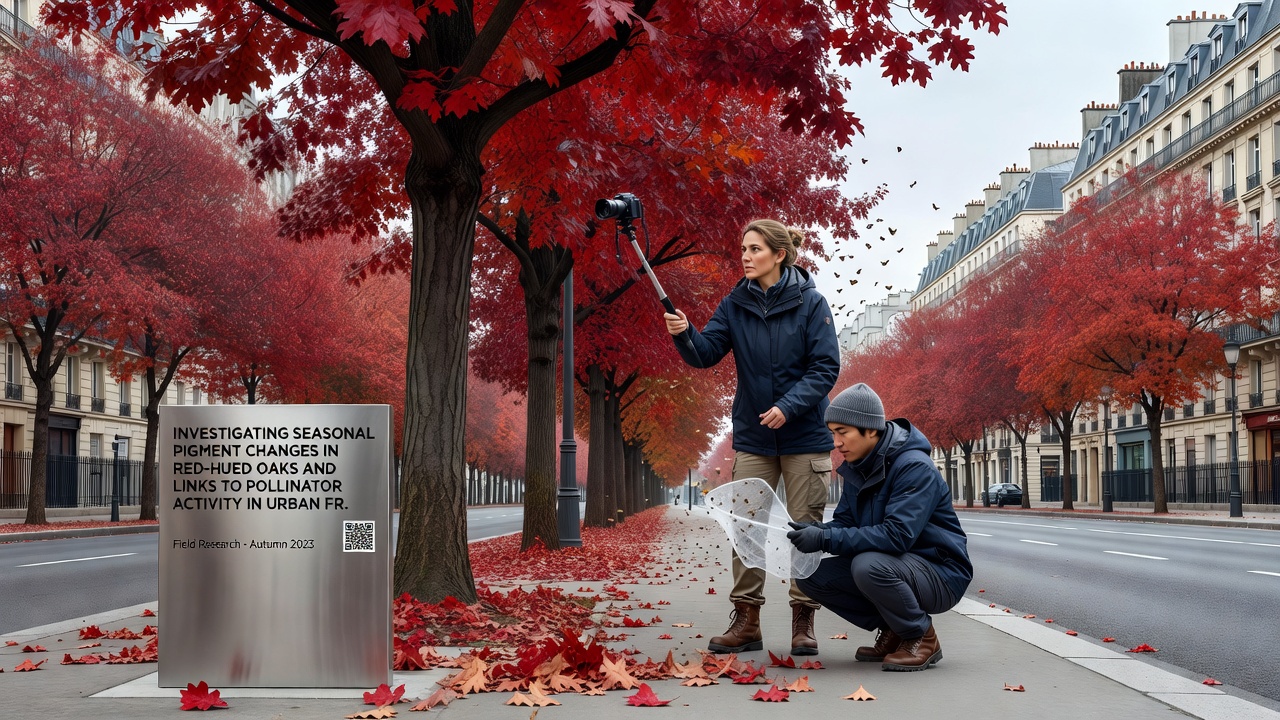
Researchers combine leaf spectroscopy, high-performance liquid chromatography for pigment quantification, and automated insect counters to build datasets that link color metrics directly to visitation rates. Spectral reflectance indices calculated from drone imagery captured during October 2026 allowed rapid classification of canopy sections into high-, medium-, and low-red categories, and statistical models showed significant positive correlation between red intensity and pollinator density within 5-meter radii. Ground-truth sampling confirmed that sites with earlier anthocyanin peaks also hosted greater numbers of overwintering queen bumblebees seeking protected hibernacula among oak leaf litter.
Regional Comparisons and Broader Patterns
Comparative work across different bioregions highlights how urban heat islands interact with oak phenology, and reports from the US Forest Service document similar pigment-pollinator alignments in Midwestern oak savannas. Parallel monitoring by Natural Resources Canada in southern Ontario woodlands reveals that red-hued oaks near expanding suburban zones maintain later leaf retention, extending resource availability for migrating monarch butterflies that pause in these areas during southward flights. Such cross-continental patterns underscore the role of pigment timing in supporting pollinator populations within human-modified landscapes.
Conclusion
Continued investigation of seasonal pigment dynamics in red-hued oaks provides measurable connections to pollinator activity patterns in urban fringe woodlands. Data gathered through 2026 demonstrates that anthocyanin expression windows align with critical late-season foraging and nesting behaviors, while site-specific conditions modulate the strength of these associations. Ongoing monitoring programs continue to refine models that predict how future changes in temperature and land use may shift these ecological linkages.